

Hong Kong's future as a global financial center
Is brighter than I thought a year ago...thanks in part to Trump.

Robert Grieves, chairman of Hamilton Advisors, and his wife Anne Lebourgeois, the firm’s co-founder, have longstanding ties to Hong Kong. Although now relocated to the United States, they continues to oversee their business advising clients doing business in Asia on brand and communications. Robert is also now writing on Substack at Eminence Grieves, from which perch he asked for my take on Hong Kong in 2025. Robert agreed to let me republish the interview here.
Eminence Grieves: What does the digital finance landscape in Hong Kong look like today? Have any regional or global leaders emerged?
Jame DiBiasio: By ‘digital finance’, you could mean how financial institutions such as banks are transforming the way they operate, or you could mean startups. Both are in healthy shape in Hong Kong: we are much further along than we were five years ago. But there remain some lags.
The Hong Kong Monetary Authority (HKMA) set out a fintech blueprint in 2017 aimed at the year 2025. Now that deadline has arrived, and we can see many of its ambitions have been met. Taking the major items in turn gives us a good idea of where we stand.
First, “all banks go fintech,” meaning full digitalization. This is a work in progress. The Covid pandemic may have had more to do with banks’ digitalization than the HKMA. But the banks have been galvanized, and digital strategies are now baked into most of their operations. Part of the HKMA’s plan included the licensing of eight virtual banks, which it accomplished; only two or three of these are likely to prove viable as standalone banks, but their entry has also forced mainstream commercial banks to up their digital game.
Second, prepare the ground for a Hong Kong or mainland China central-bank digital currency (CBDC). The HKMA has lots of pilots going on with global banks, fintechs, and telecom companies or other corporations. It has participated in cross-border CBDC projects under the auspices of the Bank of International Settlements. The technicalities seem solved. The question is whether there is any need for a CBDC. This may be more of a political question than a commercial one.
Third is digital infrastructure, with the HKMA tasked to build the Commercial Data Interchange (a marketplace of data for SME lending), digital corporate identities, and blockchain-based data sharing platforms. CDI is off to a good start, having facilitated HK$23.8 billion in new loan approvals to small businesses – representing about 11 percent of all SMEs in Hong Kong, and filling a gap in their access to finance. The other projects are still on the drawing board; digital ID would require agreement from other parts of government. However, another project that is a great success is the introduction of a domestic Faster Payments System, which now enables real-time online payments among banks and e-wallets.
Fourth was to grow fintech-savvy talent. I think this is working well. Hong Kong has an enormous capital market from which to draw seasoned financial expertise: people who understand what problems should be solved. In addition, the government has steadily supported the growth of Hong Kong’s excellent universities, encouraging faculty to be more commercially minded, and positioning more students to launch their own startups in AI and in deep tech. Also, physical connectivity with Guangdong Province makes it easier for Hong Kong businesses to tap the vast engineering skillsets in Shenzhen.
Fifth were initiatives around open banking, allowing consumers to require their financial institution share their data with third parties via API. This has not gone well. The HKMA left it to the banks to draw up protocols and standards, and the banks dragged their feet. An update was called Interbank Account Data Sharing (IADS), a banks-only club. Without fintechs – the font of innovation – this hasn’t gone very far. That said, open banking hasn’t been successful in markets where it is mandatory; it just becomes another compliance box to tick. The best examples of open banking are in places like Brazil, South Korea, and, to an extent, India, so I feel there is a lot of work yet to be done. The gold standard for open banking is mainland China, but its environment is so different that it’s hard to use as a benchmark.
How is crypto developing in Hong Kong, and how is it regulated?
I’m co-author of Block Kong (with Charles d’Haussy), which profiled Hong Kong’s blockchain entrepreneurs around 2018 or so. Back then, Hong Kong was the biggest crypto hub outside of the U.S., drawing on its culture of taking risk as well as vast ethnic Chinese networks. Many of those companies left, because the regulatory situation grew hostile, and at the time, the attitude here was ‘good riddance.’ Sam Bankman-Fried launched FTX in Hong Kong and then collapsed in the Bahamas. We dodged a bullet, but we nearly lost an entire industry.
That changed very quickly in late 2023 and early 2024. Xi Jinping had for several years been telling Hong Kong officials to position the city as a tech hub, and fintech was the most obvious place to start. Also, after Hong Kong’s drawn out, heavy-handed approach to Covid, the economy was in bad shape and the government was desperate to attract new tech talent. Finally, although mainland China has no tolerance for private crypto at home, it sees advantage in letting its offshore financial center experiment proceed with CBDCs, stablecoins, and crypto – it’s a good way to find alternatives to the traditional SWIFT network for moving money.
Whatever the reason, the policymakers in Hong Kong threw open the doors to crypto. The Securities and Futures Commission issued licenses for onshore virtual-asset service providers – crypto exchanges and brokers – and authorized crypto ETFs as soon as the US did the same. The Legislative Council has passed stablecoin legislation, also in tandem with new, pro-crypto legislation in America.
Anecdotally, we did see a return of outside talent to Hong Kong in the crypto space, and I hear from people in the space that trading volumes here are massive. There are grumbles about the regime here, as too compliance-heavy and restrictive, and the authorities are still grappling with how to supervise markets that are global. But Hong Kong has a shot at being an important player, especially for models catering to institutional or accredited investors, for whom clear regulation matters.
You co-authored a book on venture capital. What is the status of venture capital today, given trade wars, deficits and continuing market volatility?
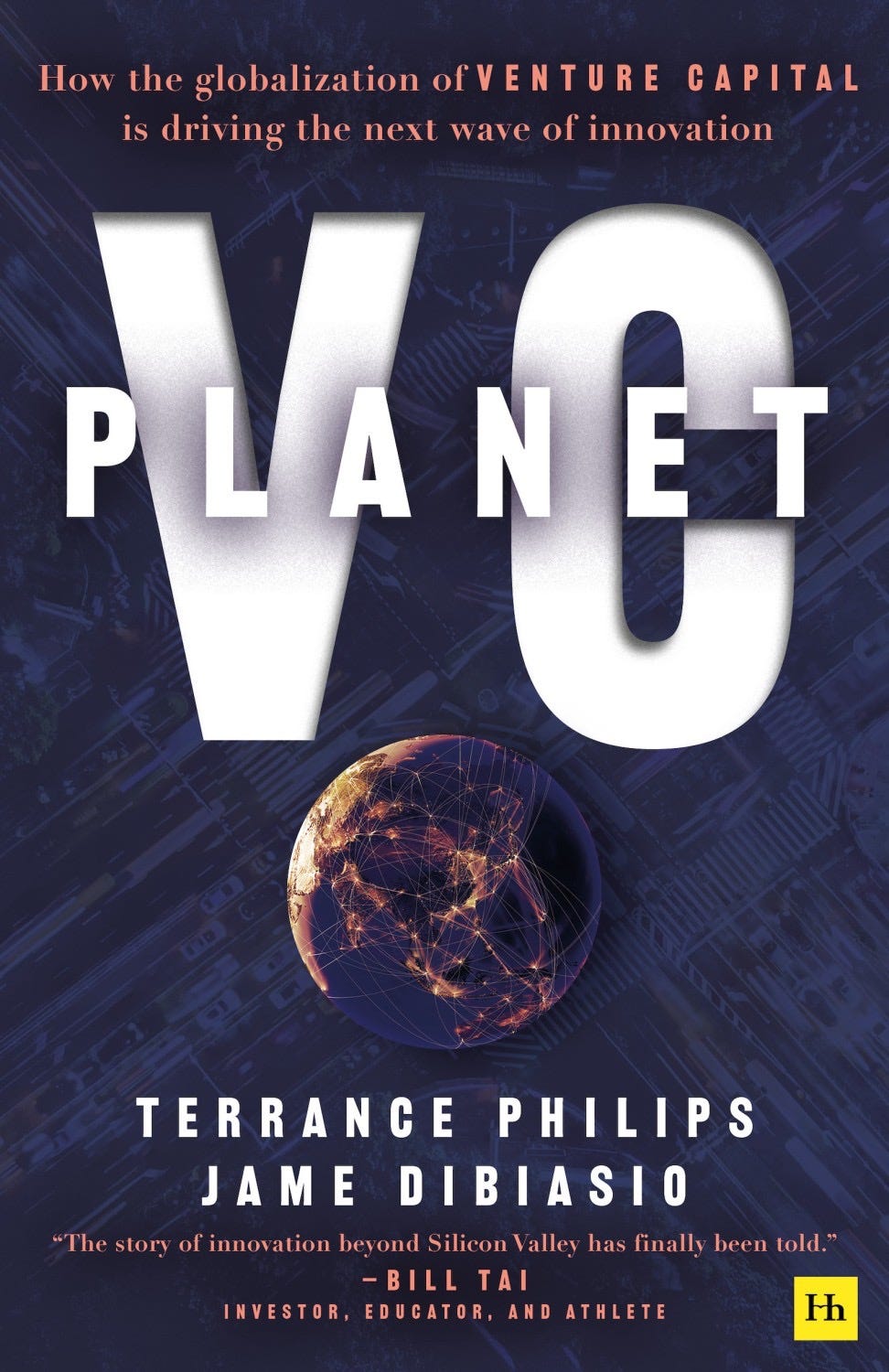
Terrance Philips and I were lucky with our timing on Planet VC. Had we written it a year earlier, we would have been stuck in the 2021 bubble, and everything would have looked great. We were able to complete the book as macroeconomic turmoil, banking crises, and geopolitical tensions were ripping up the model, particularly in China. American VC played a vital but hidden role in the rise of Chinese internet and mobile tech companies such as Alibaba. By the time we published, it was clear that the US government was going to sever those ties, and that is what happened.
The VC scene in Asia has had a rough ride, and therefore so have many of the startups they back. Exuberance in Southeast Asia has given way to a more realistic notion of the limits within a region that’s still relatively poor. There is a large domestic VC industry in China, but most of it follows government ‘guidance funds’, which have a track record of value destruction.
Meanwhile, the hot story in VC is AI, and generative AI and large-language models require vast computing resources beyond what a startup can manage, or what a VC can finance. We’re back in the realm of something like Thomas Edison, who ran giant in-house labs funded by J.P. Morgan, only now it’s Microsoft and Google that have the resources to support this, or else they rely on huge debt funding syndicated by the likes of Softbank.
There are smaller AI-related angles that VC can get into, but whereas the great computer and internet businesses were mostly VC-funded, like Apple, the tech story today is much bigger and industrialized. The top-tier VC funds in the US are creating structures to meet this, such as Sequoia’s perpetual-capital fund, designed to finance projects at scale for decades. I haven’t seen this model yet in Asia, where markets are too fragmented.
But I’m curious to see what evolves in China. DeepSeek, the Chinese LLM, was not spun out by a VC or a university or a government fund. It came out of a local quantitative hedge fund. Now there are lots of big funds being put together to find ‘the next DeepSeek’, not least in Hong Kong, where the government has launched a sovereign fund, Hong Kong Investment Corporation, for this purpose. We’ll see if this supports great new companies or is just a waste of capital.
One thing we do know is that the capital needs of the AI revolution are vast. This story will no doubt create many new opportunities for VCs to jump on, as more entrepreneurs launch AI-native businesses. But I’m not sure what the value-add for VCs will be. It used to be about helping companies network, find internal talent (like a CFO or COO), and preparing them for the next raise or even an IPO. If companies are scaling with AI, with very few employees, and conducting more partnerships in a purely arm’s-length, digital fashion, and where the big need is access to affordable or scalable computing, then it’s not clear to me how VCs make themselves useful, unless they can help companies access cloud resources – data centers and other hardware.
VC has always been an industry of tiers: the top quartile gets the best deals and the best results, and the other 75 percent get the leftovers. I imagine now that top quartile will become about size and duration and a diversified product set, and it might be more like the top 10 percent, and they’ll be more like today’s giants in private equity than old-school venture funds. The rest of the VC industry will stay niche, small, and limited to seed or Series A deals. Survival will depend on their own skill with AI and datasets to create opportunities that a clever partner can package and sell, but the days of relying on a personal Rolodex strike me as very finite.
What, then, is the future of Hong Kong as a global financial center?
Positive. There is no viable alternative to Hong Kong Exchanges in this region for large IPOs. It is a viable competitor to the markets in New York. Global investors have gone through a period of revulsion, declaring Chinese companies ‘uninvestable’. I do believe that investing in A shares (listed in Shanghai or Shenzhen) is dangerous, as the Chinese authorities have a consistent track record of market intervention and having little regard for minority or foreign shareholders or creditors. But Hong Kong is a well-run market. With New York now shut off for Chinese companies, we will see more IPOs here. And it is a potential destination for companies in Southeast Asia, including fintechs, as no exchange there has Hong Kong’s liquidity or market infrastructure.
Geopolitical tensions do hurt. This place relies on American capital too, and replacing it from sources like the Middle East can only go so far. Hong Kong’s ‘East meets West’ role is at risk. But, so far, we haven’t seen meaningful decoupling between China and the West: China is still the workshop of the world, the US financial market still where foreign assets go.
For Hong Kong, the bedrock of its role as a global financial center is the pegging of its currency to the US dollar. There are a lot of headlines about a weakening or volatile dollar, or how out of whack the local economy is to whatever interest rate reigns in America. But the big picture hasn’t changed: the dollar will remain the world’s reserve currency, the Federal Reserve the world’s backstop. The dollar peg is Hong Kong’s raison d’être, as far as Beijing is concerned. I don’t think this will change unless something catastrophic happens, like a war – in which case, we’ll all have bigger problems to worry about.